


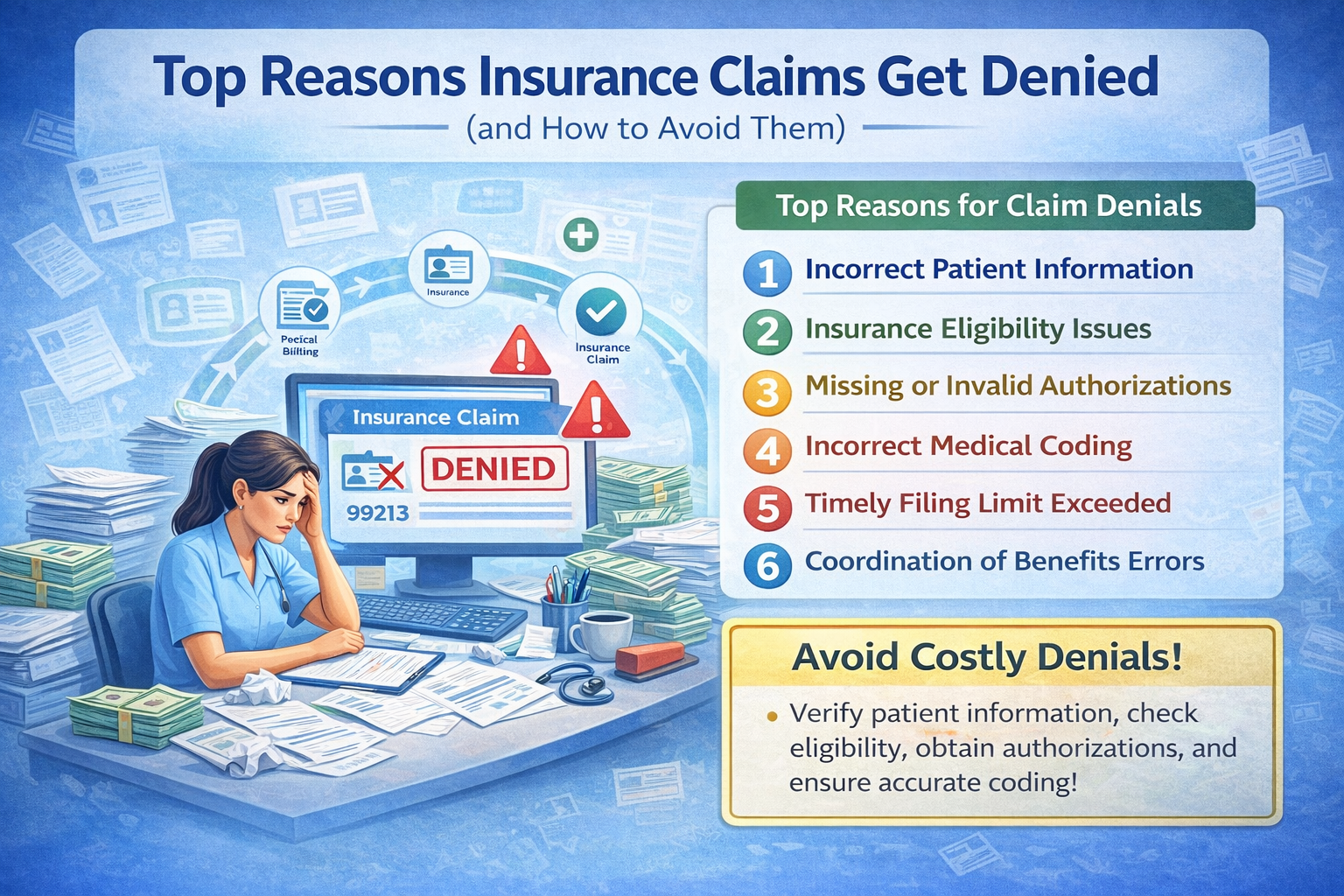
Insurance claim denials are one of the most frustrating and costly challenges healthcare providers face. Denied claims disrupt cash flow, increase administrative workload, and often lead to lost revenue if not corrected promptly. While some denials are unavoidable, the majority occur due to preventable errors in the medical billing process.
This article outlines the top reasons insurance claims get denied and provides practical strategies to avoid them, helping healthcare practices improve reimbursement rates and revenue cycle performance.
Understanding Insurance Claim Denials
A claim denial occurs when an insurance company refuses to pay for services billed. Denials can be full or partial and may require corrections, appeals, or additional documentation.
Why Claim Denials Matter
High denial rates increase days in accounts receivable, delay payments, and raise operational costs. Repeated denials can also signal deeper issues within a practice’s billing workflow.
Incorrect or Incomplete Patient Information
One of the most common reasons for claim denials is inaccurate patient data.
Common Data Errors
- Misspelled patient names
- Incorrect policy numbers
- Wrong insurance payer information
- Missing subscriber details
How to Avoid This Issue
Verify patient demographics and insurance information at every visit. Front-desk accuracy plays a critical role in preventing denials.
Insurance Eligibility Issues
Claims are often denied when patients are not eligible for coverage at the time of service.
Lack of Active Coverage
If insurance coverage is inactive or expired, the claim will likely be denied.
Prevention Strategy
Always verify insurance eligibility before providing services and confirm covered benefits, co-pays, and deductibles.
Missing or Invalid Prior Authorizations
Certain procedures and services require prior authorization from insurance companies.
Authorization-Related Denials
Failure to obtain prior authorization can result in automatic claim denial, regardless of medical necessity.
Best Practices
Implement a system to track authorization requirements and approvals before scheduling services.
Incorrect Medical Coding
Coding errors are a major contributor to claim denials.
Common Coding Mistakes
- Using outdated CPT or ICD-10 codes
- Missing or incorrect modifiers
- Mismatch between diagnosis and procedure codes
How to Reduce Coding Errors
Ensure coders stay updated with coding changes and regularly audit claims for accuracy.
Lack of Medical Necessity
Insurance companies require proof that services are medically necessary.
Documentation Gaps
Insufficient clinical documentation can lead to denials, even if services were appropriate.
Avoiding Medical Necessity Denials
Maintain clear, detailed documentation that supports diagnoses and treatment plans.
Duplicate Claims
Duplicate submissions are often automatically denied.
Why Duplicate Claims Happen
Duplicates may occur due to system errors, lack of claim tracking, or resubmissions without proper adjustments.
Prevention Tip
Track claim status carefully and avoid resubmitting claims unless required.
Timely Filing Limit Exceeded
Every insurance payer has strict deadlines for claim submission.
Impact of Late Submissions
Claims submitted after the filing deadline are typically denied with no appeal option.
How to Stay Compliant
Establish workflows to ensure claims are submitted promptly and monitored consistently.
Coordination of Benefits Errors
Patients with multiple insurance plans require proper coordination of benefits (COB).
COB-Related Denials
Incorrect billing order or missing COB information can result in denied claims.
Avoiding COB Issues
Verify primary and secondary insurance details and bill in the correct order.
Poor Claim Follow-Up
Denied claims often go unresolved due to lack of follow-up.
Revenue Loss From Inaction
Failure to address denials promptly results in missed appeal deadlines and lost revenue.
Effective Denial Management
Assign dedicated resources to track, correct, and appeal denied claims.
How Professional Medical Billing Helps Reduce Denials
Medical billing services specialize in identifying and preventing common denial causes.
Proactive Denial Prevention
Billing experts monitor payer rules, perform claim scrubbing, and ensure compliance before submission.
Efficient Appeals Process
Professional billing teams handle denials efficiently, increasing recovery rates and reducing administrative burden.
Conclusion
Insurance claim denials are a significant barrier to timely reimbursements, but most are preventable with proper medical billing practices. By addressing common denial causes such as eligibility errors, coding mistakes, and missing documentation, healthcare providers can improve claim acceptance rates and protect revenue.
Implementing strong billing workflows or partnering with professional medical billing services helps reduce denials, improve cash flow, and strengthen overall revenue cycle performance.