


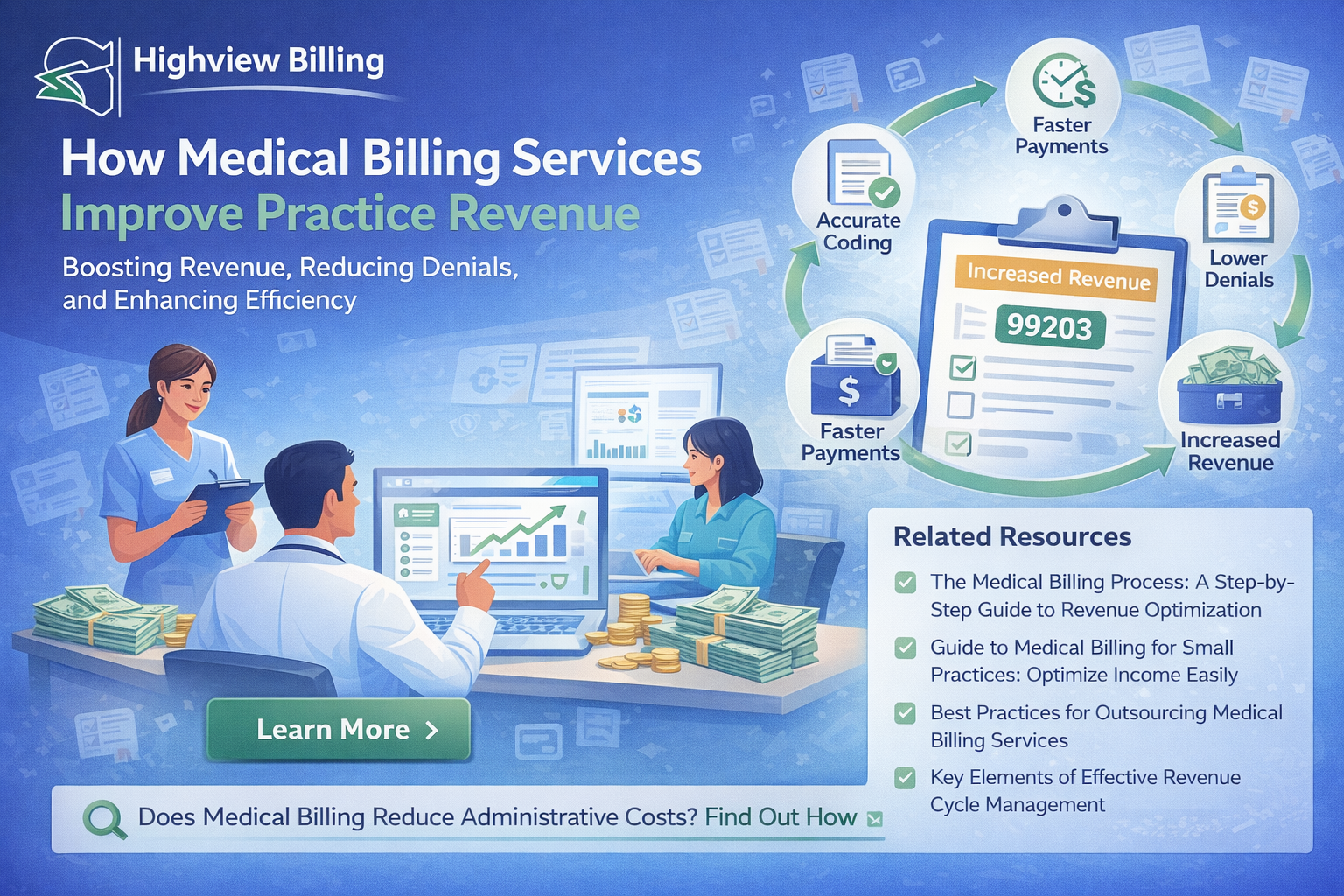
Healthcare providers operate in an increasingly complex financial environment where accurate billing and timely reimbursements are essential for sustainability. Medical billing services play a critical role in improving practice revenue by streamlining billing processes, reducing errors, and ensuring faster payments from insurance companies. For many practices, professional medical billing services are not just a convenience but a strategic investment.
If you’re new to outsourcing, explore our detailed guide on Professional Medical Billing Services:
This article explains how medical billing services help healthcare practices increase revenue, reduce administrative burdens, and maintain long-term financial stability.
Understanding the Link Between Medical Billing and Revenue
Medical billing is directly connected to a practice’s cash flow. Every claim that is delayed, denied, or underpaid represents lost or postponed revenue. Medical billing services focus on optimizing each step of the billing process to ensure that healthcare providers are compensated accurately for the services they deliver.
To understand the full billing workflow, read our step-by-step guide on The Medical Billing Process Explained:
Why Revenue Loss Happens in Medical Billing
Revenue loss often occurs due to preventable issues such as:
-
Incorrect or outdated medical codes
-
Missing or incomplete documentation
-
Insurance eligibility errors
-
Late claim submissions
-
Poor denial follow-up
Professional medical billing services are designed to address these issues proactively. Learn how we handle Medical Billing Denial Management:
Reduced Claim Denials and Rejections
Claim denials are one of the biggest challenges healthcare providers face. Medical billing services significantly reduce denial rates through accurate coding and consistent follow-ups.
You can also review official compliance guidance from the Centers for Medicare & Medicaid Services (CMS):
Improved Revenue Cycle Management
Medical billing services enhance overall revenue cycle management (RCM) by optimizing each phase of the billing lifecycle.
If you’d like a deeper understanding, check our complete guide on Revenue Cycle Management for Healthcare Practices:
Lower Administrative and Staffing Costs
Managing medical billing in-house requires hiring skilled staff, investing in billing software, and providing ongoing training.
Learn how outsourcing improves operational performance in our article: Benefits of Outsourcing Medical Billing Services
Conclusion
Medical billing services play a vital role in improving practice revenue by ensuring accurate claims, reducing denials, and optimizing revenue cycle management.
If you’re ready to improve collections and reduce billing errors, explore our Medical Billing Consultation Services: