


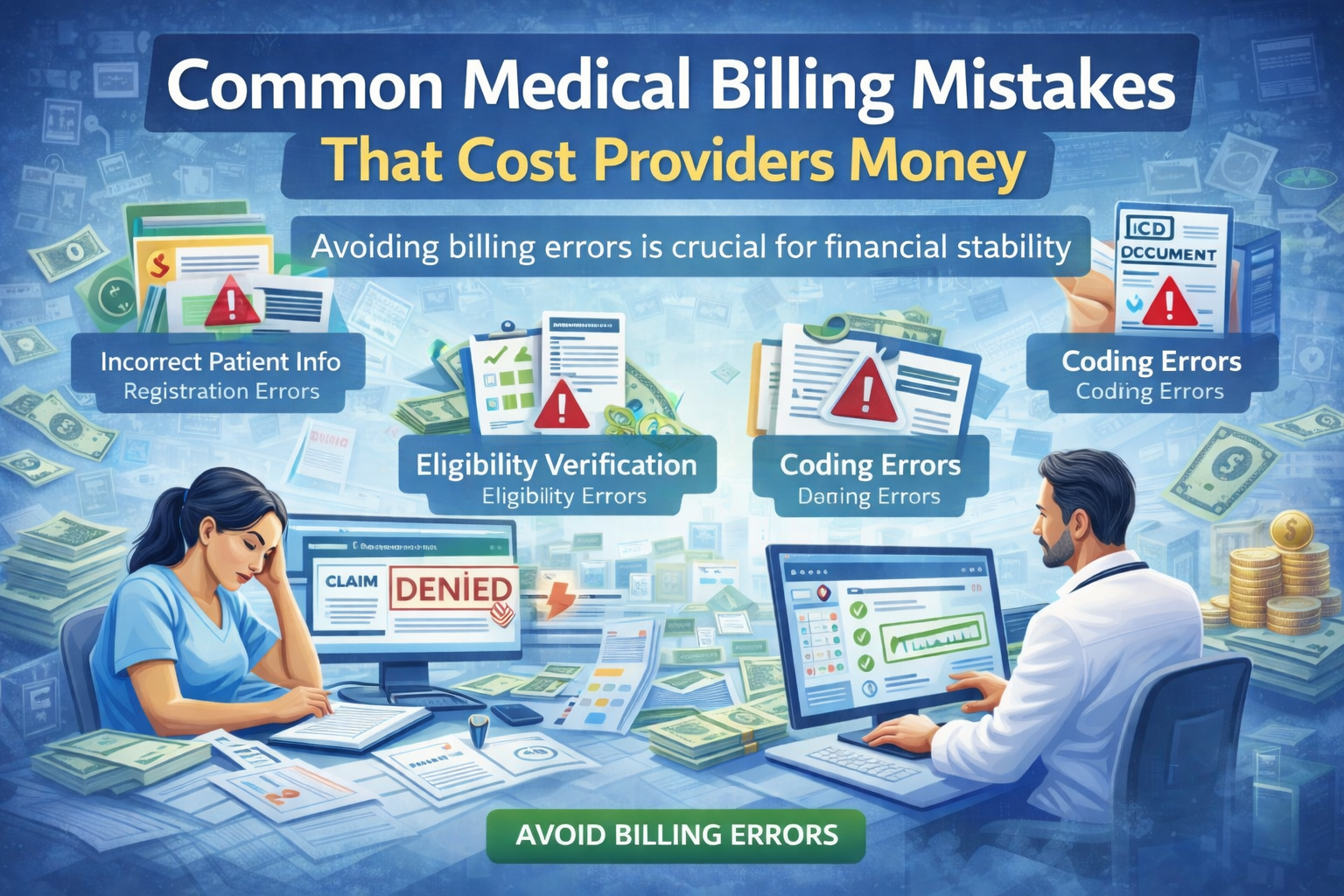
Medical billing errors are one of the leading causes of revenue loss for healthcare providers. Even small mistakes in the billing process can result in claim denials, delayed reimbursements, compliance issues, and lost income. In a healthcare environment where margins are already tight, avoiding common medical billing mistakes is essential for maintaining financial stability.
This article explores the most common medical billing mistakes that cost providers money and explains how to prevent them through effective billing practices.
Why Medical Billing Accuracy Matters
Medical billing accuracy directly impacts a practice’s revenue cycle. Errors slow down payments, increase accounts receivable days, and require additional administrative effort to correct. Over time, repeated billing mistakes can significantly reduce profitability.
Practices that implement strong Revenue Cycle Management (RCM) processes can significantly improve billing accuracy and cash flow. Learn more about how billing impacts healthcare revenue in our guide on Revenue Cycle Management.
The Hidden Cost of Billing Errors
Billing errors do not just delay payments—they increase operational costs. Staff time spent correcting mistakes, resubmitting claims, and responding to denials adds up quickly and diverts focus from patient care.
Improving clean claim rates is one of the most effective ways to reduce billing errors and accelerate reimbursements.
Incorrect Patient Information
Errors often begin at the front desk during patient registration.
Common Registration Errors
-
Misspelled patient names
-
Incorrect date of birth
-
Wrong insurance policy numbers
-
Inaccurate demographic details
Even minor inaccuracies can cause claim rejections. Verifying patient information at every visit is a simple yet effective way to reduce billing issues.
Failure to Verify Insurance Eligibility
Insurance eligibility verification is a critical step that is frequently overlooked or rushed.
How Eligibility Errors Impact Revenue
If a patient’s insurance coverage is inactive or does not cover certain services, claims may be denied outright. This often results in unpaid balances that are difficult to collect from patients.
Practices that focus on accurate claim submission and insurance verification experience fewer denials and faster reimbursements.
Incorrect or Outdated Medical Coding
Medical coding errors are among the most common and costly billing mistakes.
Using Incorrect CPT or ICD-10 Codes
Incorrect code selection can lead to underpayments, overpayments, or claim denials. Outdated codes are often automatically rejected by insurance payers.
Lack of Coding Updates
Coding guidelines change regularly. Failure to stay updated with CPT, ICD-10, and HCPCS revisions increases the risk of non-compliance and revenue loss.
Missing or Incomplete Documentation
Insurance companies require detailed and accurate documentation to support billed services.
Documentation Gaps
Missing physician notes, incomplete treatment records, or unclear diagnoses can result in denied claims or delayed payments.
Importance of Clinical Accuracy
Clear and complete documentation ensures that billed services align with medical necessity requirements, improving approval rates.
Late Claim Submissions
Timely claim submission is critical for reimbursement.
Missing Filing Deadlines
Most insurance companies have strict claim filing deadlines. Late submissions are often denied with no opportunity for appeal, resulting in permanent revenue loss.
Creating Efficient Workflows
Establishing clear billing workflows helps ensure claims are submitted promptly and tracked consistently.
Practices looking to streamline workflows often benefit from outsourcing medical billing services.
Poor Denial Management
Denials are inevitable, but how they are managed makes a significant difference.
Ignoring Denied Claims
Failing to follow up on denied claims results in lost revenue. Many denied claims can be corrected and resubmitted successfully.
Root Cause Analysis
Identifying denial patterns allows practices to fix recurring issues and prevent future losses.
Inaccurate Charge Entry
Errors during charge entry can lead to incorrect billing amounts.
Underbilling and Overbilling
Underbilling reduces revenue, while overbilling increases the risk of audits and compliance violations. Accurate charge entry ensures appropriate reimbursement.
Lack of Compliance Awareness
Non-compliance with billing regulations can have serious financial consequences.
Regulatory Risks
HIPAA violations, incorrect use of modifiers, and failure to follow payer policies can result in fines, audits, and reputational damage.
Healthcare providers should stay updated with federal compliance standards published by the Centers for Medicare & Medicaid Services (CMS).
How to Prevent Medical Billing Mistakes
Preventing billing errors requires a proactive and structured approach.
Invest in Staff Training
Ongoing training ensures billing staff stay updated with coding changes and payer requirements.
Use Technology and Automation
Billing software and automated tools reduce manual errors and improve accuracy.
Consider Professional Medical Billing Services
Outsourcing medical billing provides access to experienced professionals who specialize in accuracy, compliance, and denial management.
Conclusion
Medical billing mistakes can cost healthcare providers significant revenue if left unaddressed. From incorrect patient information to poor denial management, each error creates financial and operational challenges.
By implementing best practices, leveraging technology, and partnering with professional medical billing services, providers can reduce errors, protect revenue, and ensure long-term financial success.
Avoiding these common medical billing mistakes is not just about improving reimbursements—it is about building a sustainable and efficient healthcare practice.