


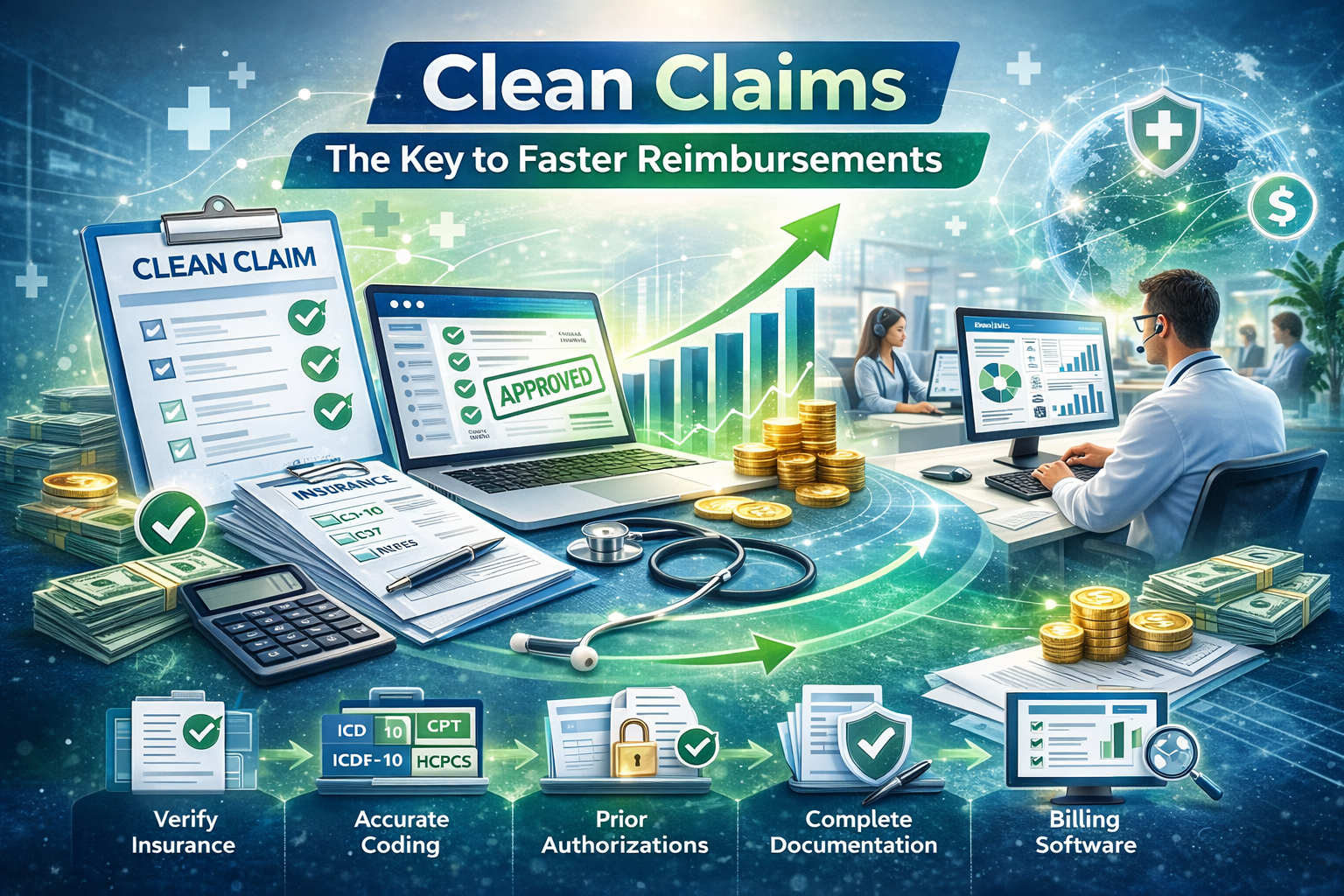
In healthcare billing, the concept of a “clean claim” is crucial for ensuring timely and accurate reimbursements. A clean claim is a claim that is free of errors, complete, and meets all payer requirements. Submitting clean claims reduces denials, accelerates cash flow, and strengthens the financial stability of a healthcare practice.
This article explains what clean claims are, why they matter, and how healthcare providers can consistently submit claims that get paid quickly.
What Is a Clean Claim?
A clean claim is a properly completed insurance claim that contains accurate patient information, valid codes, and all necessary documentation. It is submitted in compliance with the payer’s guidelines and has a high likelihood of being approved on the first submission.
Components of a Clean Claim
- Correct patient demographics and insurance information
- Accurate CPT, ICD-10, and HCPCS codes
- Complete clinical documentation
- Proper use of modifiers
- Verification of insurance eligibility and benefits
Why Clean Claims Are Important
Submitting clean claims is essential for maintaining an efficient revenue cycle.
Faster Reimbursements
Clean claims are processed more quickly by insurance companies, resulting in faster payments and improved cash flow.
Reduced Denials
Errors in claims are the most common cause of denials. Clean claims minimize the risk of rejections and reduce the need for rework.
Lower Administrative Costs
Handling claim rejections and corrections requires additional staff time and resources. Clean claims reduce these costs and increase operational efficiency.
Common Reasons Claims Are Not Clean
Even experienced practices can submit claims that are not clean. Common issues include:
- Incorrect or incomplete patient information
- Missing or invalid codes
- Lack of prior authorizations
- Insufficient documentation supporting medical necessity
- Duplicate claims
Understanding these issues is the first step in preventing them.
Steps to Ensure Clean Claims
Healthcare practices can adopt several best practices to consistently submit clean claims.
Verify Patient and Insurance Information
Check patient demographics, insurance policy numbers, and coverage details at each visit. Accurate data entry reduces errors and denials.
Accurate Medical Coding
Ensure that diagnoses and procedures are coded correctly according to current CPT, ICD-10, and HCPCS standards. Regular coding audits help maintain accuracy.
Obtain Prior Authorizations
Confirm whether services require prior authorization and secure approvals before delivering care. This prevents automatic denials from payers.
Complete Documentation
Maintain thorough and precise clinical documentation that supports billed services and justifies medical necessity.
Use Technology and Automation
Billing software can flag errors, verify codes, and check payer requirements before submission, reducing human error.
Staff Training and Continuous Education
Regular training ensures staff are up-to-date with coding changes, payer policies, and best practices for claim submission.
The Role of Professional Medical Billing Services
Outsourcing medical billing can significantly increase the number of clean claims submitted.
Expertise in Payer Rules
Professional billing teams are familiar with the nuances of various insurance payers and know how to meet their requirements.
Efficient Claim Scrubbing and Submission
Billing services use technology to review claims for errors, ensuring high first-pass acceptance rates and faster reimbursements.
Denial Management Support
When claims are denied, professional billing teams quickly identify and correct issues, resubmitting claims to recover revenue.
Benefits of Maintaining Clean Claims
Maintaining a high rate of clean claims has multiple benefits:
- Faster reimbursement cycles
- Reduced administrative workload
- Improved practice cash flow
- Enhanced patient satisfaction
- Compliance with payer and regulatory requirements
Conclusion
Clean claims are the cornerstone of efficient medical billing and faster reimbursements. By verifying patient and insurance information, coding accurately, securing prior authorizations, and maintaining complete documentation, healthcare practices can significantly reduce denials and improve cash flow.
Partnering with professional medical billing services further enhances the accuracy of claims and ensures that practices receive timely payments, allowing providers to focus on delivering high-quality patient care.