


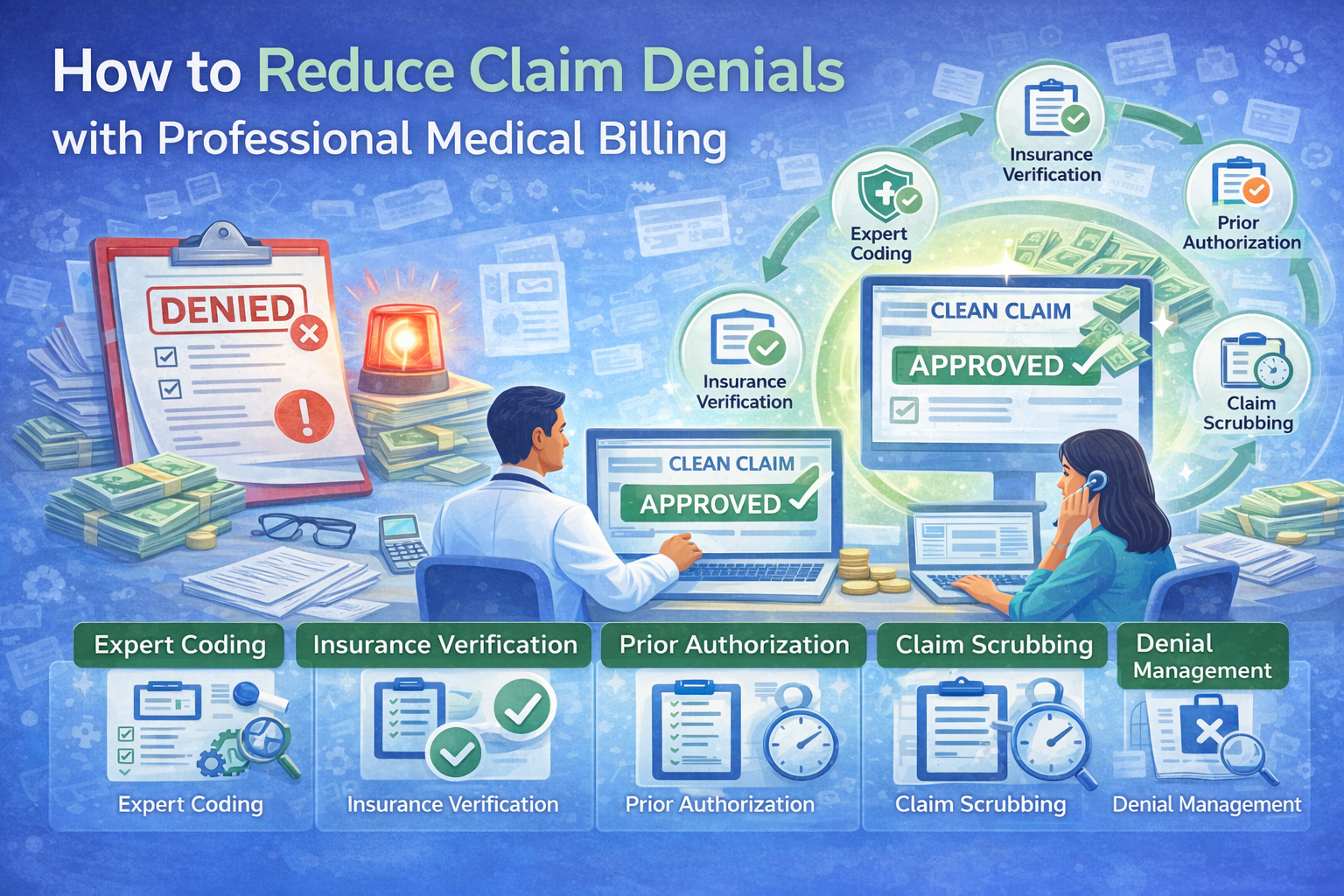
Claim denials are a major challenge for healthcare practices, causing delays in reimbursement and increasing administrative workload. While denials are inevitable in some cases, professional medical billing services can significantly reduce their frequency and impact. By leveraging expertise, technology, and standardized processes, medical billing companies help practices maintain a smoother revenue cycle.
If you’re new to the topic, you can start by understanding what medical billing is and how it impacts healthcare revenue, which explains how billing directly affects reimbursements and practice stability.
This article explores strategies for reducing claim denials through professional medical billing services and highlights the benefits for healthcare providers.
Understanding Claim Denials
A claim denial occurs when an insurance payer refuses payment for a submitted service. Denials can be partial or complete and typically require resubmission or correction. According to the Centers for Medicare & Medicaid Services (CMS), accurate documentation and coding are essential to ensure compliance and avoid unnecessary denials.
Why Reducing Denials Matters
High denial rates lead to:
-
Delayed cash flow
-
Increased administrative workload
-
Lost revenue if claims are not resubmitted
-
Lower staff productivity
Reducing denials improves overall revenue cycle efficiency and strengthens financial performance.
Common Causes of Claim Denials
Professional medical billing services address common causes that lead to denials.
Incorrect or Incomplete Patient Information
Errors in patient demographics or insurance details are frequent denial reasons.
Insurance Eligibility Issues
Claims are denied if coverage is inactive or insufficient at the time of service. Proper verification processes, as discussed in our guide on <a href=”https://highview-billing.com/how-medical-billing-services-improve-practice-revenue/”>how medical billing services improve practice revenue</a>, help prevent these avoidable denials.
Coding Errors
Incorrect or outdated CPT, ICD-10, or HCPCS codes can trigger denials. Proper coding compliance is essential to reimbursement accuracy.
Lack of Prior Authorization
Some services require prior authorization, and missing approvals result in automatic denials.
Insufficient Documentation
Incomplete clinical records that do not support medical necessity are a common denial cause.
How Professional Medical Billing Reduces Denials
Medical billing companies specialize in preventing and resolving claim denials through proactive measures.
Expert Coding and Documentation Review
Billing specialists review clinical documentation and ensure coding accuracy, reducing errors that lead to denials. You can also explore how CPT coding impacts reimbursement in our article on CPT documentation and coding requirements.
Insurance Verification and Eligibility Checks
Professional billing teams confirm patient coverage and benefits before claims are submitted, preventing eligibility-related denials.
Prior Authorization Management
Medical billing services track and obtain required authorizations to ensure claims meet payer requirements.
Claim Scrubbing and Quality Control
Automated claim scrubbing tools identify errors before submission, improving first-pass acceptance rates and reducing rework.
Timely Follow-Up and Denial Management
When denials occur, billing professionals investigate reasons, correct errors, and resubmit claims efficiently, recovering revenue quickly.
Benefits of Using Professional Medical Billing Services
Partnering with an experienced medical billing service provides multiple advantages for healthcare practices.
Improved Cash Flow
By reducing claim denials, practices receive payments faster and maintain steady revenue.
Reduced Administrative Burden
Outsourcing billing allows staff to focus on patient care instead of spending time correcting denials.
Enhanced Compliance
Billing experts ensure claims comply with payer rules and healthcare regulations, reducing the risk of audits and penalties.
Higher First-Pass Claim Acceptance
Professional billing teams increase the percentage of claims approved on the first submission, minimizing resubmissions and delays.
Best Practices for Practices to Support Denial Reduction
Even with professional medical billing services, practices can contribute to denial prevention by:
-
Maintaining accurate and up-to-date patient information
-
Ensuring complete and clear clinical documentation
-
Communicating necessary authorizations and referrals
-
Educating staff about common billing errors and coding updates
Conclusion
Reducing claim denials is essential for efficient revenue cycle management and financial stability. Professional medical billing services play a crucial role by ensuring accurate coding, verifying insurance eligibility, managing prior authorizations, and handling denials effectively.
By partnering with expert billing teams, healthcare practices can minimize denials, accelerate reimbursements, reduce administrative workload, and focus on providing high-quality patient care. A proactive approach to billing and denial management leads to a healthier practice and stronger revenue cycle performance.