


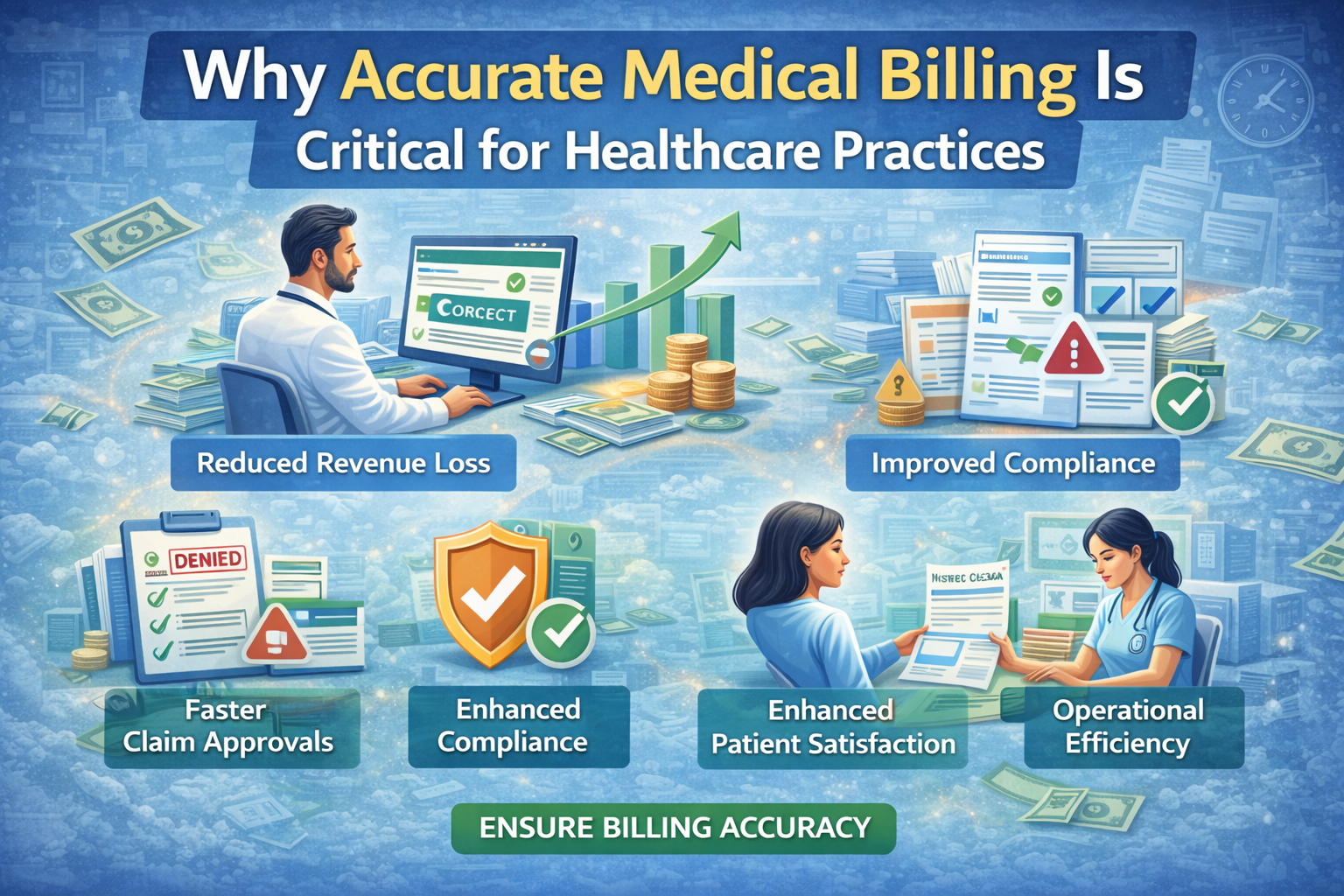
Accurate medical billing is the foundation of a healthcare practice’s financial health. While patient care is the primary focus of any medical organization, proper billing ensures that providers are fairly reimbursed for the services they deliver. Even minor inaccuracies in the billing process can lead to claim denials, delayed payments, compliance risks, and long-term revenue loss.
This article explains why accurate medical billing is critical for healthcare practices and how it supports financial stability, compliance, and patient satisfaction.
The Role of Accuracy in Medical Billing
Medical billing accuracy means that every service provided is documented correctly, coded properly, and billed according to payer guidelines. Accuracy at each step of the billing process reduces errors and ensures smoother claim processing.
Healthcare organizations that maintain accurate billing workflows also strengthen their revenue cycle management (RCM) processes. Learn more about how billing affects practice revenue in our guide:
How Small Errors Create Big Problems
A single incorrect code, missing modifier, or incomplete patient detail can cause an entire claim to be denied or delayed. Over time, these errors accumulate and significantly impact cash flow.
Many practices experience revenue loss due to common billing errors. You can explore these issues in detail in our article on common medical billing mistakes that cost providers money.
Accurate Billing Improves Cash Flow
Consistent cash flow is essential for healthcare practices to cover operational costs and invest in growth.
Faster Claim Approvals
Accurate claims are more likely to be approved on the first submission. Clean claims reduce back-and-forth with insurance companies and speed up reimbursements.
Improving clean claim rates is one of the most effective ways to ensure faster payments.
Reduced Accounts Receivable Days
When claims are processed correctly, practices experience fewer delays, resulting in lower days in accounts receivable and improved financial stability.
A well-structured billing workflow—from patient registration to claim submission—plays a key role in reducing payment delays.
Reducing Claim Denials and Revenue Loss
Claim denials are one of the most costly consequences of inaccurate medical billing.
Common Causes of Denials
-
Incorrect or outdated medical codes
-
Missing or incomplete documentation
-
Eligibility and authorization errors
-
Duplicate or inconsistent claims
Accurate billing minimizes these issues and protects practice revenue.
Healthcare providers can significantly lower denial rates by implementing better billing practices and professional support.
Recovering Lost Revenue
Practices with accurate billing processes spend less time correcting errors and more time collecting legitimate payments.
Ensuring Compliance With Healthcare Regulations
Medical billing must comply with strict healthcare regulations and payer-specific rules.
Avoiding Audits and Penalties
Inaccurate billing increases the risk of audits, fines, and penalties. Accurate coding and documentation demonstrate compliance and reduce regulatory risk.
HIPAA and Billing Accuracy
Accurate billing also involves protecting patient data and maintaining confidentiality in accordance with HIPAA guidelines.
Supporting Accurate Medical Coding
Medical billing accuracy depends heavily on proper coding.
Preventing Underbilling and Overbilling
Underbilling results in lost revenue, while overbilling can trigger audits and damage a practice’s reputation. Accurate coding ensures fair and appropriate reimbursement.
Keeping Up With Coding Changes
Regular updates to ICD-10, CPT, and HCPCS codes require ongoing attention to maintain billing accuracy.
Enhancing Patient Trust and Satisfaction
Patients are directly affected by billing accuracy.
Clear and Understandable Patient Bills
Accurate billing results in clear statements that patients can understand, reducing confusion and disputes.
Fewer Billing Complaints
When bills are accurate, patients are more likely to pay on time, improving patient relationships and practice reputation.
Operational Efficiency and Staff Productivity
Inaccurate billing creates extra work for staff.
Reducing Rework and Administrative Burden
Correct billing reduces the need for resubmissions, appeals, and follow-ups, allowing staff to focus on higher-value tasks.
Improving Workflow Efficiency
Accurate billing processes streamline workflows and improve overall practice efficiency.
Many healthcare providers improve workflow efficiency by outsourcing their billing operations to experienced professionals.
Financial Reporting and Decision-Making
Accurate billing data supports better business decisions.
Reliable Financial Insights
Correct billing information allows practices to track revenue trends, evaluate payer performance, and plan for growth.
Supporting Long-Term Growth
With accurate financial data, healthcare providers can make informed decisions about staffing, services, and expansion.
How to Maintain Medical Billing Accuracy
Healthcare practices can improve billing accuracy through proactive measures.
Ongoing Staff Training
Regular training helps billing teams stay updated with changing regulations and coding guidelines.
Use of Technology and Automation
Modern billing software reduces manual errors and improves accuracy.
Partnering With Professional Medical Billing Services
Outsourcing billing to experienced professionals ensures accuracy, compliance, and consistent revenue performance.
Conclusion
Accurate medical billing is critical for healthcare practices because it directly affects revenue, compliance, and patient satisfaction. By minimizing errors, reducing denials, and ensuring timely reimbursements, accurate billing supports long-term financial health.
Whether managed in-house or through professional medical billing services, accuracy should be a top priority for every healthcare practice aiming for stability and growth.