


Introduction
Surgical procedures are among the most complex and high-value services in healthcare. Accurate billing for these procedures is essential to ensure proper reimbursement, maintain compliance, and avoid costly claim denials.
One of the key elements in surgical billing is the use of CPT (Current Procedural Terminology) codes. These codes standardize how surgical services are reported and processed by insurance providers.
This article explains surgical CPT codes, their importance, common categories, and best practices for accurate billing.
What Are Surgical CPT Codes?
Surgical CPT codes are a subset of CPT codes used to describe surgical procedures performed by healthcare providers. These codes fall under the 10000–69990 range, which covers procedures across multiple specialties such as general surgery, cardiology, orthopedics, and more.
Each code represents a specific procedure, allowing insurance companies to understand what service was performed and determine reimbursement accordingly.
Importance of Surgical CPT Codes
Accurate Reimbursement
Surgical procedures often involve significant costs. Correct CPT coding ensures providers are reimbursed appropriately for their services.
Reduction in Claim Denials
Incorrect coding, missing modifiers, or incomplete documentation can result in denied or delayed claims. Accurate coding minimizes these risks.
Compliance with Regulations
Healthcare providers must follow strict coding guidelines. Proper use of CPT codes helps avoid audits, penalties, and legal issues.
Improved Revenue Cycle Efficiency
Accurate surgical coding speeds up claim processing and improves cash flow for healthcare organizations.
Categories of Surgical CPT Codes
Surgical CPT codes are organized based on the type of procedure performed.
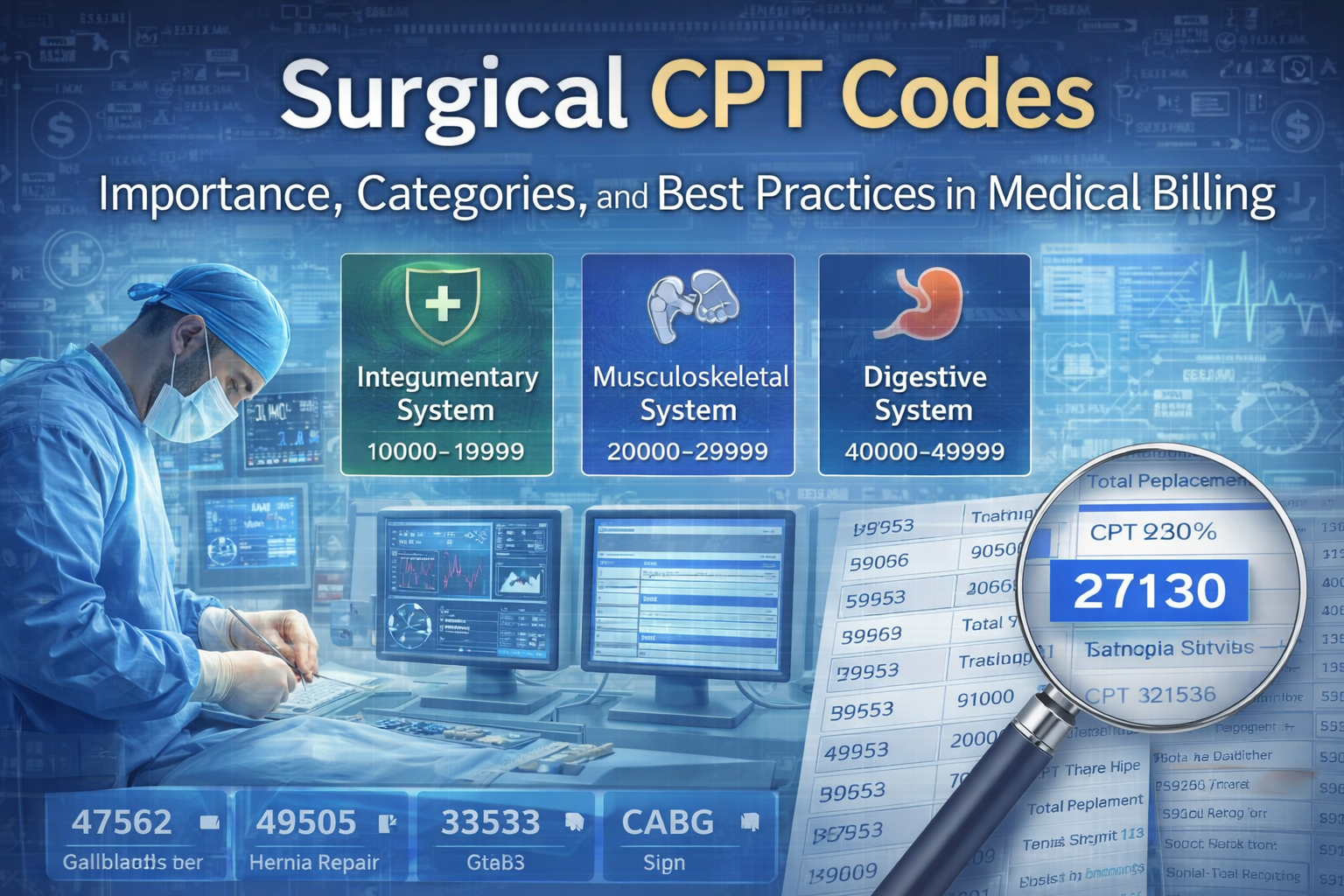
Integumentary System (10000–19999)
Includes procedures related to the skin, such as:
- Wound repairs
- Skin grafts
- Lesion removals
Musculoskeletal System (20000–29999)
Covers procedures involving bones, joints, and muscles:
- Fracture repairs
- Joint replacements
- Arthroscopic procedures
Cardiovascular System (33010–37799)
Includes surgical procedures related to the heart and blood vessels:
- Bypass surgeries
- Valve repairs
- Vascular procedures
Digestive System (40000–49999)
Covers procedures involving the gastrointestinal tract:
- Appendectomy
- Hernia repair
- Colon surgery
Urinary System (50000–53899)
Includes procedures such as:
- Kidney surgeries
- Bladder procedures
Nervous System (60000–64999)
Covers surgeries related to the brain and nerves:
- Neurosurgical procedures
- Spinal surgeries
Commonly Used Surgical CPT Codes
Some commonly used surgical CPT codes include:
- 47562 – Laparoscopic cholecystectomy (gallbladder removal)
- 49505 – Inguinal hernia repair
- 33533 – Coronary artery bypass graft (CABG)
- 27130 – Total hip replacement
- 63030 – Lumbar discectomy
Providers should always verify codes with the latest CPT updates to ensure accuracy.
Role of Modifiers in Surgical Coding
Modifiers are essential in surgical billing as they provide additional details about the procedure performed.
Common modifiers include:
- Modifier 22 – Increased procedural services
- Modifier 51 – Multiple procedures
- Modifier 59 – Distinct procedural service
- Modifier 78 – Return to operating room
- Modifier 79 – Unrelated procedure during postoperative period
Proper use of modifiers ensures correct reimbursement and prevents claim rejection.
Common Errors in Surgical CPT Coding
Incorrect Code Selection
Choosing the wrong CPT code for a procedure can lead to underpayment or denial.
Missing or Incorrect Modifiers
Modifiers are critical in surgical billing. Missing or incorrect modifiers often result in claim issues.
Inadequate Documentation
Lack of detailed operative notes can make it difficult to justify the selected CPT code.
Unbundling of Procedures
Billing separately for procedures that should be bundled can lead to compliance violations.
Use of Outdated Codes
Failure to update coding practices annually can result in rejected claims.
Best Practices for Surgical CPT Coding
Ensure Detailed Documentation
Accurate operative reports are essential to support coding decisions.
Stay Updated with Coding Guidelines
CPT codes are updated regularly, so staying informed is critical.
Use Certified Coders
Experienced coders can handle complex surgical billing requirements effectively.
Perform Regular Audits
Audits help identify errors and improve coding accuracy over time.
Leverage Technology
Advanced billing systems can reduce manual errors and streamline processes.
Challenges in Surgical Billing
Surgical billing is complex due to:
- High-value procedures
- Multiple coding combinations
- Frequent use of modifiers
- Strict payer requirements
These challenges make accuracy and expertise essential.
Benefits of Outsourcing Surgical Billing
Outsourcing surgical billing services can help healthcare providers:
- Improve coding accuracy
- Reduce claim denials
- Increase revenue
- Save time and administrative effort
Conclusion
Surgical CPT codes are a critical component of medical billing and revenue cycle management. Accurate coding ensures proper reimbursement, reduces claim denials, and maintains compliance with healthcare regulations.
Healthcare providers who implement best practices in surgical coding and billing are better positioned to optimize their revenue and improve operational efficiency.