


Introduction
Accurate medical billing is essential for the financial stability of healthcare organizations, and CPT (Current Procedural Terminology) codes play a central role in this process. In cardiology, where procedures are often complex and high-value, proper coding is critical to ensure timely reimbursement, maintain compliance, and minimize claim denials.
This article provides a comprehensive overview of cardiology CPT codes, their importance, common categories, and best practices for accurate usage.
What Are CPT Codes?
CPT (Current Procedural Terminology) codes are standardized codes developed and maintained by the American Medical Association (AMA). These codes are used to describe medical, surgical, and diagnostic services performed by healthcare providers.
CPT codes serve as a universal language between healthcare providers and insurance payers, enabling accurate billing and reimbursement.
What Are Cardiology CPT Codes?
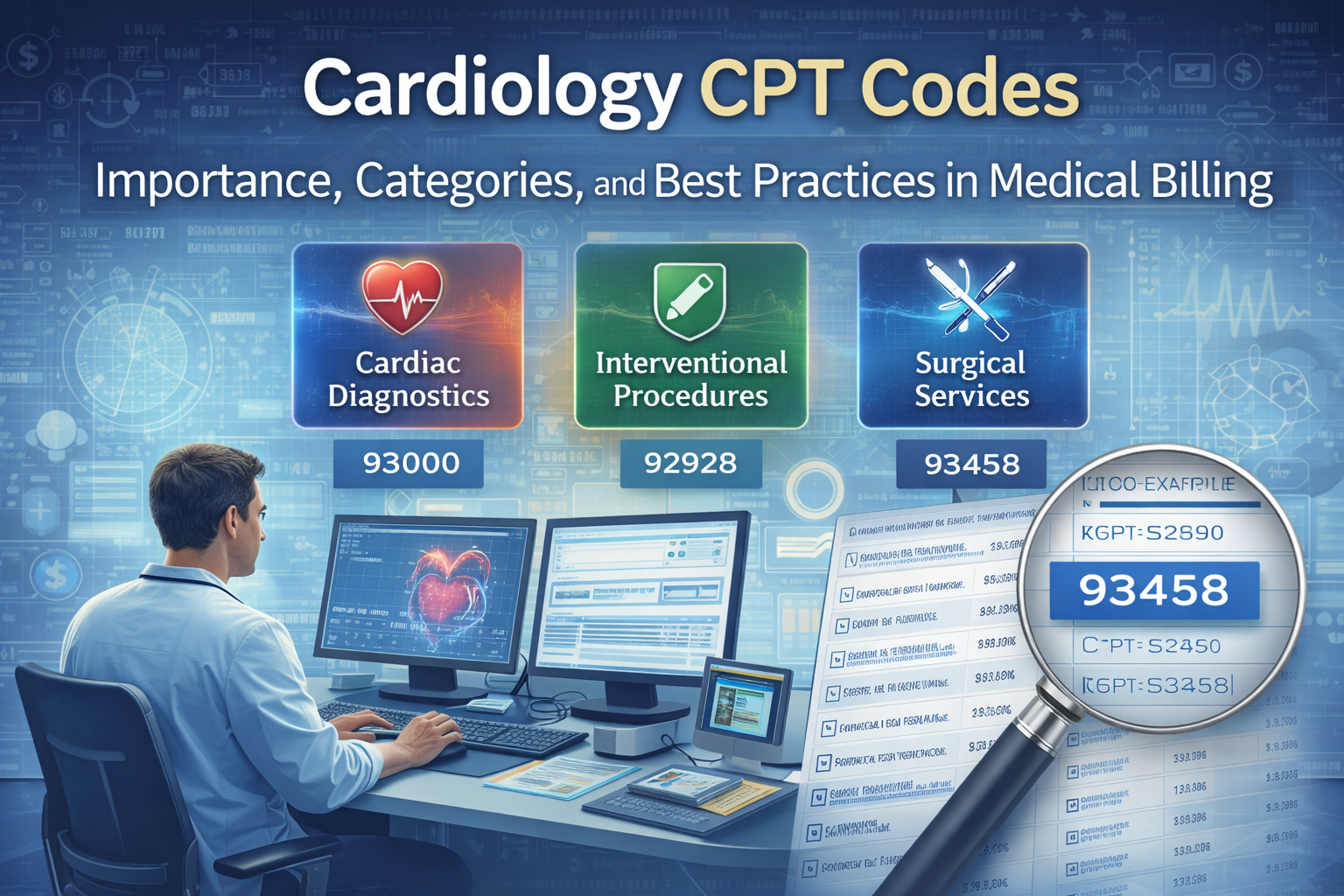
Cardiology CPT codes are specific codes used to report procedures and services related to the diagnosis and treatment of cardiovascular conditions. These codes cover a wide range of services, including diagnostic testing, imaging, interventional procedures, and surgical treatments.
Given the complexity of cardiology services, accurate coding is essential to ensure proper reimbursement and regulatory compliance.
Importance of CPT Codes in Cardiology Billing
Accurate Reimbursement
Correct CPT coding ensures that healthcare providers are reimbursed appropriately for the services they deliver. Inaccurate coding can lead to underpayment or overpayment.
Reduction in Claim Denials
Incorrect or incomplete coding is one of the primary reasons for claim denials. Accurate CPT code selection reduces the likelihood of rejected claims.
Regulatory Compliance
Proper use of CPT codes helps healthcare organizations comply with federal and payer-specific regulations, reducing the risk of audits and penalties.
Improved Revenue Cycle Management
Efficient coding contributes to faster claim processing and improved cash flow within the organization.
Data and Performance Tracking
CPT codes enable healthcare providers to analyze treatment patterns, outcomes, and financial performance.
Categories of Cardiology CPT Codes
Evaluation and Management (E/M) Codes
These codes are used for patient visits, including consultations, follow-ups, and hospital visits.
Diagnostic Testing Codes
These codes apply to non-invasive tests used to evaluate heart conditions, such as electrocardiograms and stress tests.
Imaging Codes
Imaging procedures provide detailed visualization of the heart and blood vessels. Common examples include echocardiography and cardiac imaging studies.
Cardiac Catheterization Codes
These codes are used for invasive diagnostic and interventional procedures involving catheter insertion into the heart or blood vessels.
Interventional and Surgical Codes
These include procedures such as stent placement, pacemaker implantation, and other cardiac interventions.
Commonly Used Cardiology CPT Codes
Some frequently used cardiology CPT codes include:
- 93000 – Electrocardiogram (ECG) with interpretation and report
- 93306 – Complete transthoracic echocardiography with Doppler
- 93458 – Coronary angiography with left heart catheterization
- 92928 – Percutaneous coronary intervention with stent placement
- 93224 – Holter monitoring for continuous cardiac recording
Healthcare providers should always verify codes against the latest CPT guidelines, as updates are made annually.
Common Errors in Cardiology CPT Coding
Inaccurate Code Selection
Selecting codes that do not accurately reflect the procedure performed can lead to denials or compliance issues.
Insufficient Documentation
Incomplete or unclear documentation makes it difficult to assign correct CPT codes.
Missing Modifiers
Modifiers provide additional information about procedures. Omitting required modifiers can result in claim rejection.
Use of Outdated Codes
Using outdated CPT codes leads to claim denials and delays in reimbursement.
Unbundling of Services
Billing separately for services that should be reported together may violate coding guidelines and result in penalties.
Best Practices for Accurate Cardiology Coding
Maintain Detailed Documentation
Accurate and complete clinical documentation is essential for proper coding and billing.
Stay Updated with Coding Changes
CPT codes and guidelines are updated regularly. Staying informed ensures compliance and accuracy.
Employ Certified Coding Professionals
Certified coders have the expertise required to handle complex cardiology procedures.
Conduct Regular Audits
Routine audits help identify errors, improve accuracy, and reduce compliance risks.
Utilize Advanced Billing Systems
Modern billing software can reduce manual errors and improve workflow efficiency.
Challenges in Cardiology Billing
Cardiology billing presents unique challenges due to the complexity of procedures, frequent coding updates, and strict payer requirements. These factors increase the risk of errors and make expertise in coding essential.
Benefits of Outsourcing Cardiology Billing
Outsourcing cardiology billing services can help healthcare providers:
- Reduce administrative burden
- Improve coding accuracy
- Increase claim acceptance rates
- Enhance overall revenue performance
Conclusion
Cardiology CPT codes are a critical component of medical billing and revenue cycle management. Accurate coding ensures proper reimbursement, minimizes claim denials, and supports compliance with healthcare regulations.
Healthcare providers that invest in proper coding practices, staff training, and efficient billing systems are better positioned to optimize their revenue cycle and maintain financial stability.