


Introduction
The healthcare industry is evolving rapidly, and medical billing is at the center of this transformation. In 2026, artificial intelligence (AI) is no longer a futuristic concept—it is a practical tool that is reshaping how healthcare providers manage their revenue cycle. From reducing errors to accelerating reimbursements, AI is helping practices become more efficient, accurate, and profitable.
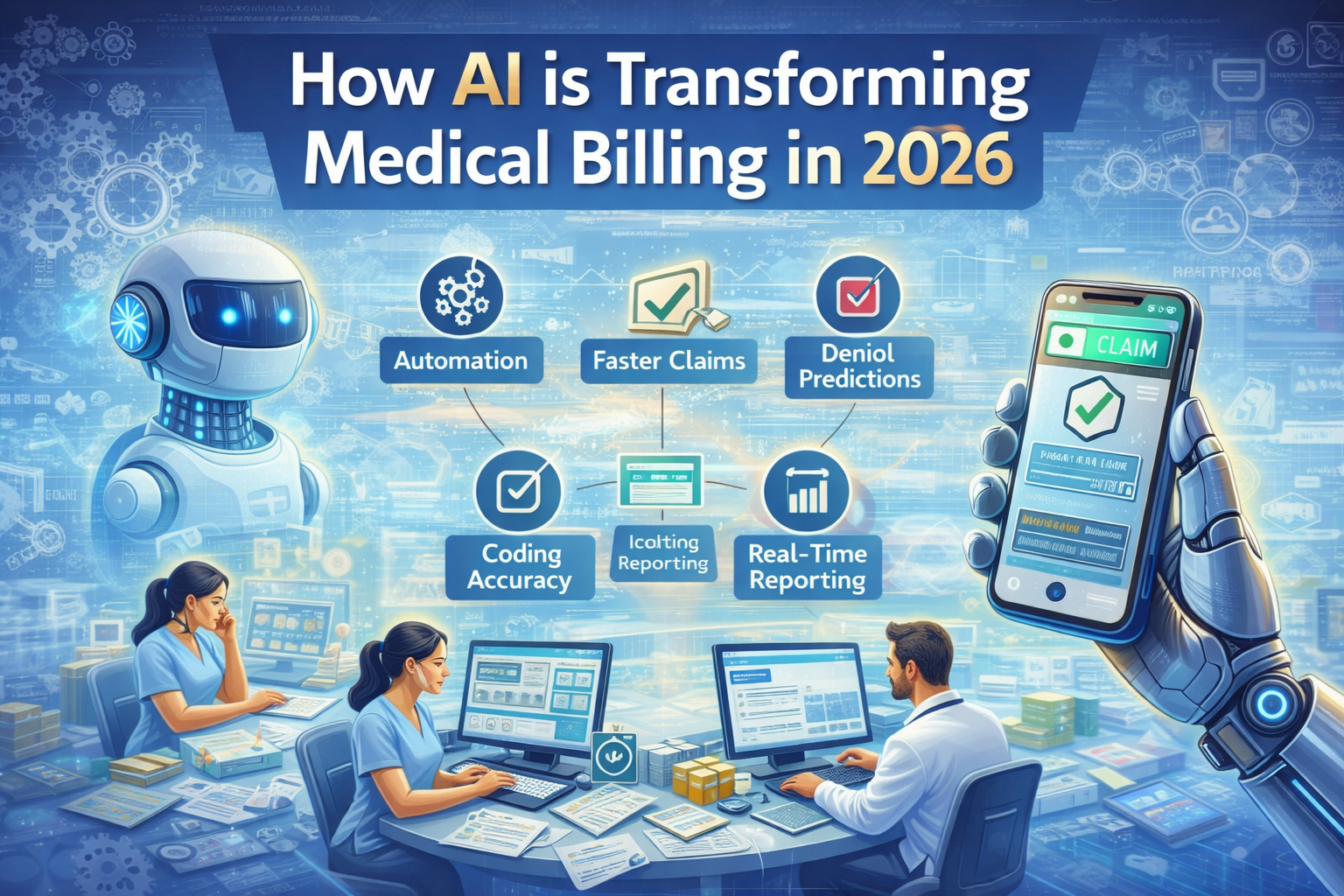
1. Automation of Repetitive Tasks
Medical billing involves numerous repetitive tasks such as data entry, charge posting, and claim submission. AI-powered systems can automate these processes, reducing manual workload and minimizing human error.
This allows billing staff to focus on more strategic tasks like denial management and financial analysis, improving overall productivity.
2. Faster and Cleaner Claim Submissions
One of the biggest challenges in medical billing is claim rejection due to incomplete or incorrect information. AI tools can analyze claims before submission and flag errors in real time.
By ensuring that claims are accurate and complete, practices can achieve higher clean claim rates and receive payments faster.
3. Predictive Denial Management
AI can analyze historical billing data to identify patterns in claim denials. This enables billing teams to predict which claims are at risk and take corrective action before submission.
As a result, healthcare providers can significantly reduce denial rates and improve cash flow.
4. Enhanced Coding Accuracy
Accurate medical coding is essential for compliance and proper reimbursement. AI-assisted coding tools help assign the correct CPT, ICD-10, and HCPCS codes based on clinical documentation.
This not only reduces coding errors but also minimizes the risk of audits and penalties.
5. Real-Time Analytics and Reporting
AI-powered dashboards provide real-time insights into key financial metrics such as:
- Accounts receivable (A/R) days
- Claim status
- Revenue trends
- Payer performance
These insights help healthcare providers make informed decisions and quickly identify areas that need improvement.
6. Improved Patient Experience
AI is also enhancing the patient experience by streamlining billing communication. Automated systems can generate clear, accurate patient statements and even offer payment reminders.
This leads to better transparency and higher patient satisfaction.
Conclusion
Artificial intelligence is transforming medical billing by improving accuracy, reducing administrative burden, and increasing revenue efficiency. As the healthcare industry becomes more competitive, adopting AI-driven solutions is no longer optional—it’s essential for growth and sustainability.
Healthcare providers who embrace AI today will be better positioned to thrive in the future, delivering both financial success and improved patient care.
Final Thoughts
At HighView Billing, we stay ahead of industry trends by integrating advanced technologies and best practices into our billing solutions. Our goal is to help healthcare providers maximize revenue while reducing stress and operational challenges.
If you’re ready to modernize your billing process, now is the time to explore the power of AI.