


he healthcare industry is rapidly evolving — and so is medical billing. Staying on top of trends helps healthcare providers optimize revenue, reduce errors, and improve patient satisfaction. At Highview Billing, our mission is to help clinics, hospitals, and healthcare practices navigate the complex world of billing with confidence.
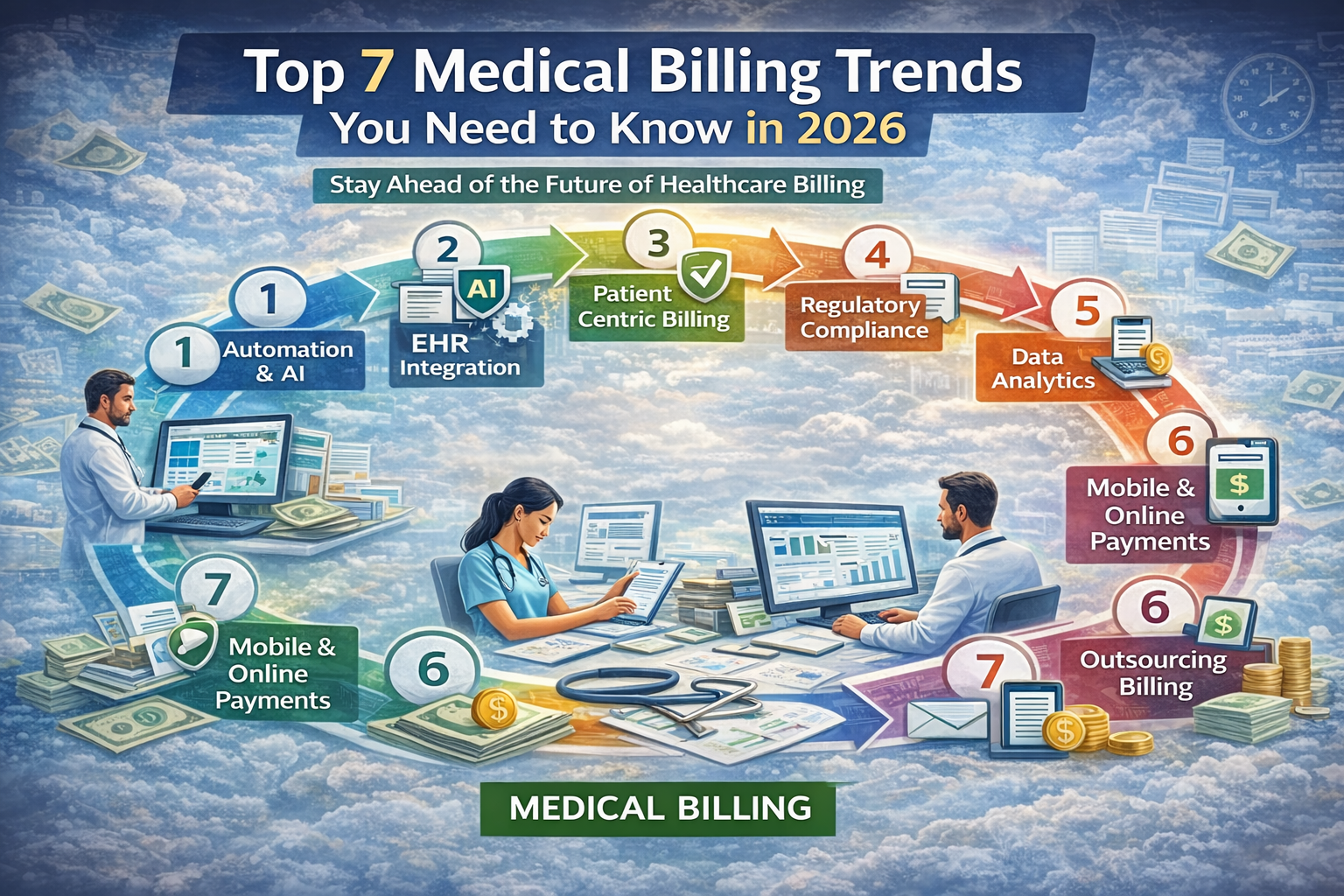
Here are the top medical billing trends shaping 2026:
1. Automation and AI Are Transforming Billing Workflows
Healthcare providers are increasingly using automated systems and artificial intelligence (AI) to reduce repetitive tasks. Automation speeds up claim submission, minimizes human error, and increases accuracy — bringing faster reimbursements to practices. AI can also help identify coding errors before claims are submitted, lowering rejection rates.
2. Integrated Billing & Electronic Health Records (EHR) Become Standard
Integrated medical billing systems that connect directly with EHRs streamline workflows, reduce duplicate data entry, and ensure billing information matches clinical records. This integration improves operational efficiency and revenue cycle management for practices of all sizes.
3. Patient‑Centric Billing Is More Important Than Ever
Patients now expect clear, transparent billing statements. Practices that offer easy‑to‑understand invoices, multiple payment options, and proactive cost estimates improve patient satisfaction and reduce confusion — ultimately encouraging faster payments.
4. Regulatory Changes Require Closer Compliance Monitoring
Regulators update healthcare billing policies frequently. Billing services must stay current with changes to CPT/ICD coding standards and compliance requirements — including HIPAA privacy rules — to avoid claim denials and potential legal issues.
5. Analytics and Predictive Insights Improve Financial Outcomes
Billing departments are using data analytics to forecast future revenue patterns, identify common claim denial causes, and allocate resources efficiently. Predictive analytics also help practices spot irregularities early, reducing billing cycle delays.
6. Mobile and Online Payment Options Continue to Grow
More patients now prefer mobile payment methods or online portals for settling medical bills. Offering flexible options — from smartphone payments to secure online billing portals — improves convenience and accelerates payment turnaround.
7. Outsourcing Billing Can Be a Game‑Changer for Busy Practices
Many small and mid‑sized clinics choose to partner with third‑party billing companies like Highview Billing to reduce administrative burden and let clinical staff focus on patient care. Experienced billing teams often get higher reimbursement rates and improve revenue cycle performance.
Final Thoughts
Medical billing is no longer just paperwork — it’s a strategic component of a practice’s financial health. Whether dealing with automation, compliance, or patient‑focused billing, staying informed about industry trends gives healthcare providers an edge in 2026 and beyond.