


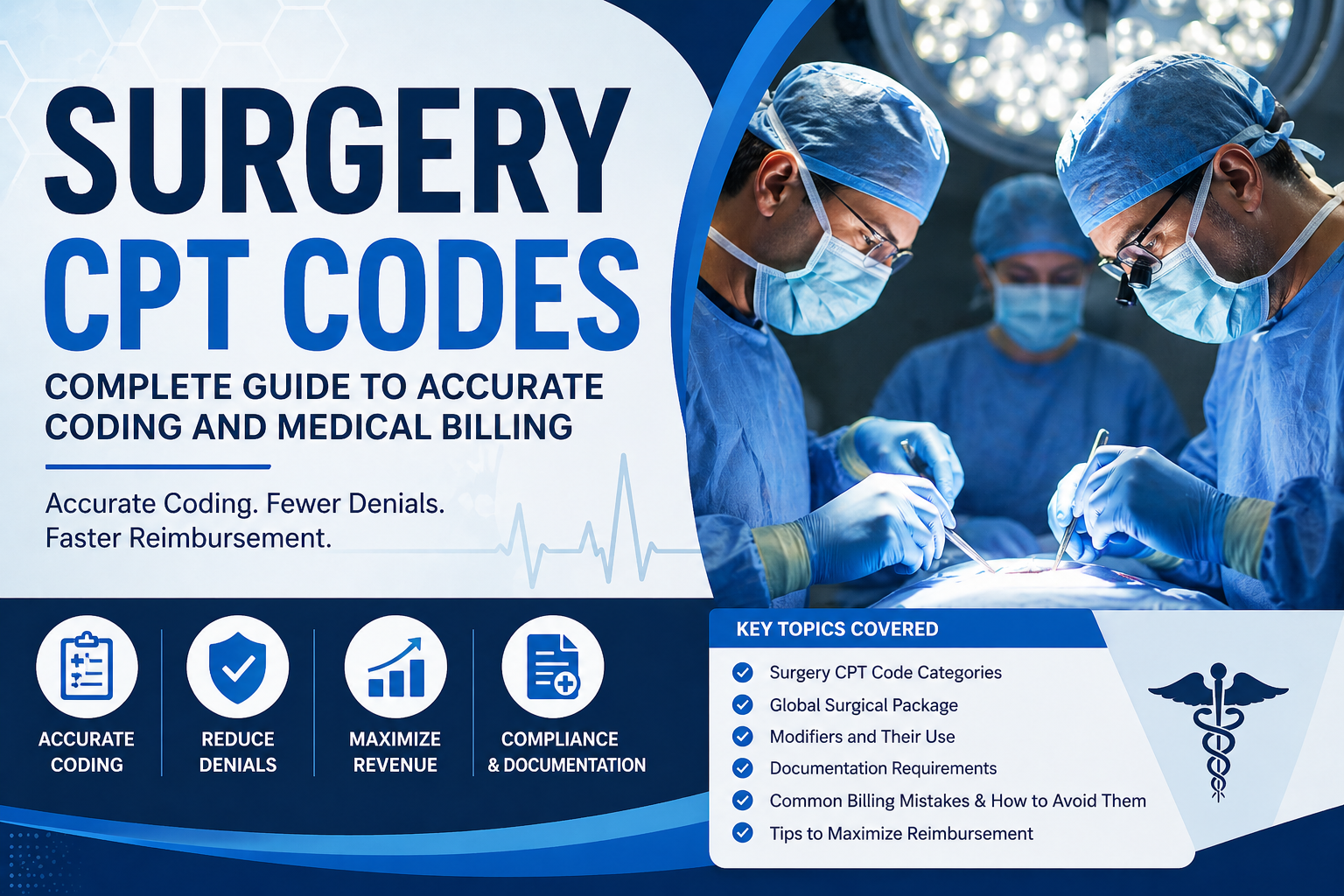
Surgical procedures are among the most valuable services in healthcare, but they also require precise and detailed billing. Many healthcare providers face revenue loss due to incorrect use of surgery CPT codes, missing modifiers, or incomplete documentation. Even a small mistake in surgical coding can lead to claim denials or delays in payment.
Understanding how surgical CPT codes work is essential for maintaining a healthy revenue cycle. With proper coding practices, providers can ensure accurate reimbursement while staying compliant with payer guidelines.
What Are Surgery CPT Codes?
Surgery CPT codes are part of the Current Procedural Terminology system used to describe surgical procedures performed by healthcare professionals. These codes fall within the range of 10000 to 69990 and cover everything from minor procedures to complex surgeries.
Each code represents a specific service, and selecting the correct code depends on the procedure performed, the anatomical site, and the complexity involved. Accurate coding ensures that insurance companies clearly understand the service provided, which helps in faster claim processing.
Understanding Surgical Code Categories
Surgical CPT codes are organized based on body systems. This structure helps coders quickly identify the correct code range for a procedure. For example, procedures related to the skin and soft tissues fall under the integumentary system, while bone and joint procedures fall under the musculoskeletal system.
Similarly, there are separate sections for respiratory, cardiovascular, digestive, urinary, reproductive, and nervous system surgeries. Each category contains highly specific codes, which means careful review of the operative report is necessary before selecting a code.
The Importance of the Global Surgical Package
One of the most important concepts in surgical billing is the global surgical package. This package includes all services related to a surgery within a defined time period. It typically covers pre-operative evaluation, the surgery itself, and post-operative care.
Depending on the procedure, the global period may be zero, ten, or ninety days. During this period, certain services cannot be billed separately because they are already included in the surgical package. Failing to understand this concept can result in rejected claims or compliance issues.
Role of Modifiers in Surgical Coding
Modifiers play a critical role in surgical billing because they provide additional details about the procedure performed. They help explain special circumstances such as increased complexity, multiple procedures, or services performed during the post-operative period.
For example, Modifier 22 is used when a procedure requires significantly more work than usual, while Modifier 25 is used when a separate evaluation and management service is performed on the same day as a procedure. Proper use of modifiers ensures that providers receive appropriate reimbursement for the services they deliver.
Documentation Requirements for Surgical Billing
Accurate documentation is the foundation of successful surgical coding. Without detailed records, even correctly performed procedures may not be reimbursed. Every surgical claim should be supported by a complete operative report.
This report should clearly describe the procedure, the anatomical site, the technique used, and the medical necessity for the surgery. It should also include details about the complexity and any complications that occurred during the procedure. Strong documentation not only supports billing but also protects against audits.
Common Mistakes in Surgical CPT Coding
Many billing errors occur due to simple but critical mistakes. One of the most common issues is selecting the wrong CPT code because the operative report was not reviewed carefully. Another frequent problem is incorrect or missing modifiers, which can change how a claim is processed.
Unbundling services that are already included in the global surgical package is another common error. Additionally, failing to link the correct diagnosis code with the procedure can result in claim denials. Avoiding these mistakes requires attention to detail and regular training.
Tips to Improve Surgical Billing Accuracy
Improving surgical billing starts with a clear understanding of coding guidelines and payer requirements. Reviewing operative notes thoroughly before coding is essential. Coders should also stay updated with changes in CPT codes and insurance policies.
Using modifiers correctly and conducting regular audits can significantly reduce errors. Practices that invest in training and quality checks often experience fewer denials and faster reimbursements.
Why Surgical Coding Requires Expertise
Surgical coding is complex because it involves multiple variables, including procedure type, patient condition, and payer rules. Many surgeries involve multiple steps or additional procedures, which must be coded correctly to avoid underbilling or overbilling.
Because of this complexity, many healthcare providers choose to work with experienced medical billing professionals who specialize in surgical coding and revenue cycle management.
How Highview Billing Can Support Your Practice
Highview Billing provides expert medical billing services designed to improve accuracy and maximize revenue. Our team specializes in surgical coding, ensuring that every claim is handled with precision.
We help healthcare providers reduce denials, improve documentation, and streamline their billing processes. By outsourcing your billing to professionals, you can focus more on patient care while maintaining a strong financial performance.
Conclusion
Surgery CPT coding is a critical component of medical billing that directly impacts revenue and compliance. With accurate coding, proper documentation, and correct use of modifiers, healthcare providers can significantly improve their reimbursement rates.
Understanding the fundamentals of surgical billing and applying best practices can help reduce errors and create a more efficient revenue cycle. Partnering with experienced billing experts can further enhance these results.